
Arabic Perfume Notes Explained: Oud, Saffron and Amber

Two Arabic perfumes both have oud in their notes list and smell quite different because agarwood varies by species, region, and resin age, and many perfumes use an oud accord instead of natural oil. Saffron is usually recreated around a molecule called safranal, and amber is a blend of labdanum, benzoin and vanilla. A note list only makes sense once you know what each name covers.
What Sets Arabic Perfumes Apart
The materials behind Arabic perfumes have been part of Gulf life for centuries: oud, musk, amber and bakhoor, the incense that fills a home before guests arrive. Because these are resins, woods and spices, much of the character sits in the base notes, the part that develops after the opening has faded. So an Arabic luxury perfume shows most of its character hours after the first spray.
Houses list notes in three tiers. Top notes are what you smell first, middle notes form the body, and base notes stay the longest, so reading the base note first tells you the most about how a bottle will wear.
Oud: Where the Smell Comes From
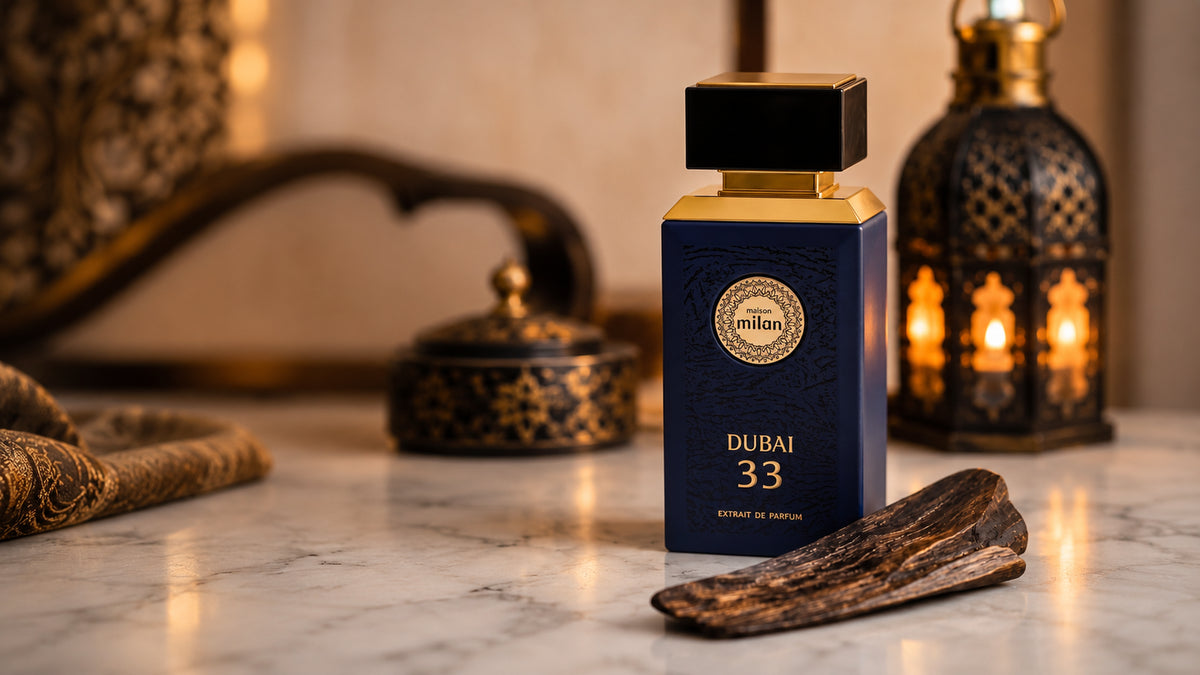
Oud is agarwood, the resin-saturated heartwood of Aquilaria trees. The tree produces the resin only after it has been wounded and infected by a fungus, as a defence against the infection, and the pale wood darkens as it fills. Only a small share of wild trees go through this process, which explains much of the price of genuine oud oil. The aroma also changes with the species, the region, the age of the resin, and the way it is processed, so two bottles that both say oud can smell quite different.
Agarwood also holds its fragrance for a very long time when handled properly, which is why it has been stored and traded over long distances for centuries and why it works well as a base note.
Oud perfume formulas often use an oud accord assembled from other materials in place of the natural oil, and some oud oil on the market is diluted with patchouli. The label rarely settles on what you are buying, so the note list and the brand's own description are the better guides. Emarat Elixir, agarwood is listed as the base note, under Indian saffron at the top and rosemary in the heart.
Saffron: Leather, Honey and a High Price
Saffron comes from the dried stigmas of saffron crocus, three per flower, picked by hand, and priced accordingly. Fresh stigmas smell very little. The aroma develops as they dry, and the compound mostly responsible is safranal. In perfume, the note reads as leathery, honeyed and slightly metallic, with a faint medicinal edge that some people notice and others don't.
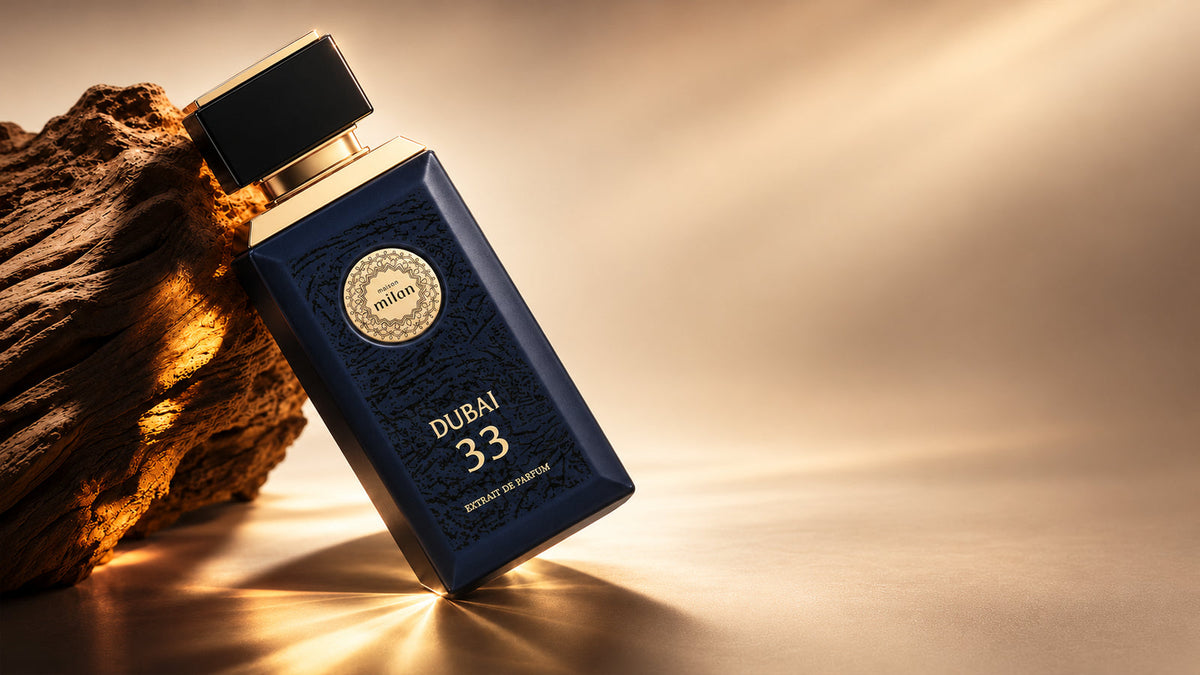
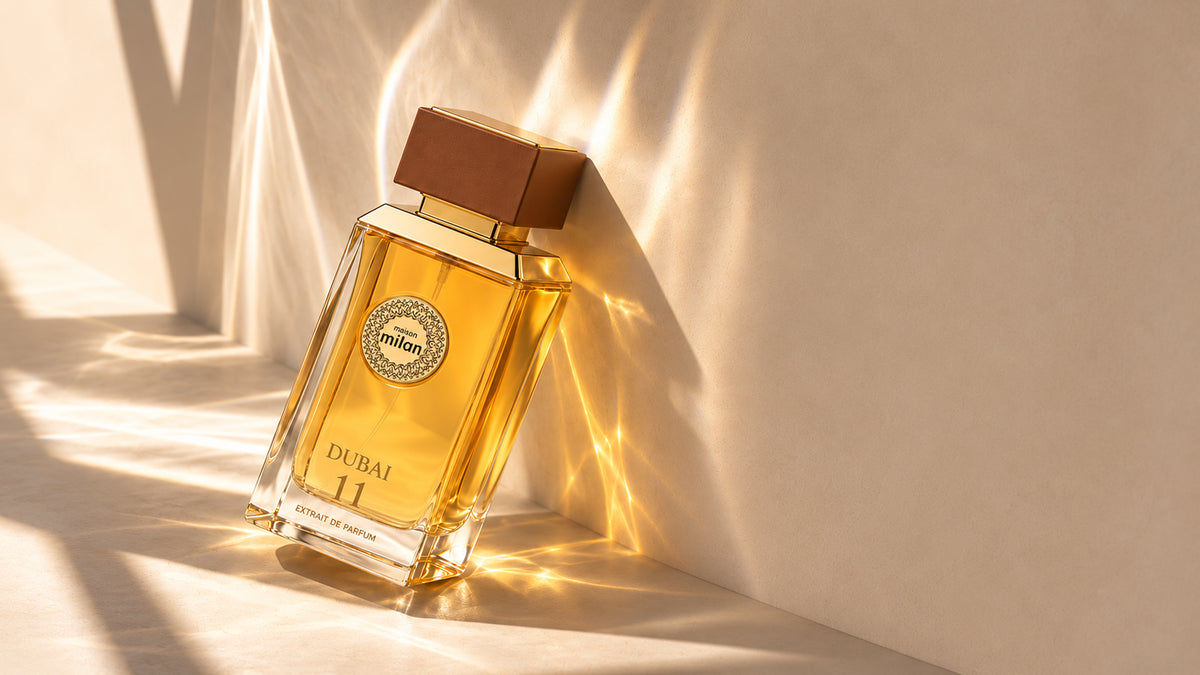
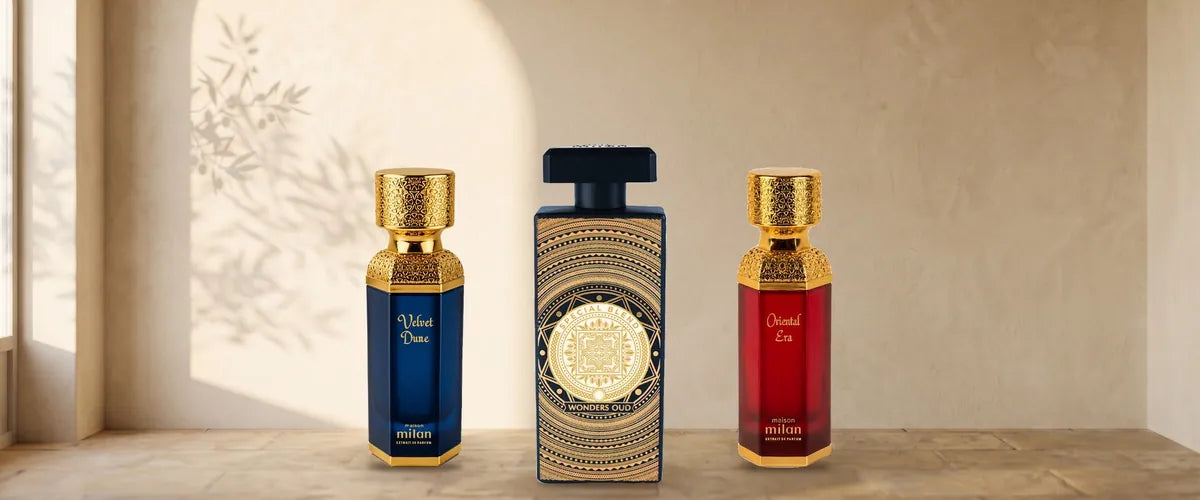
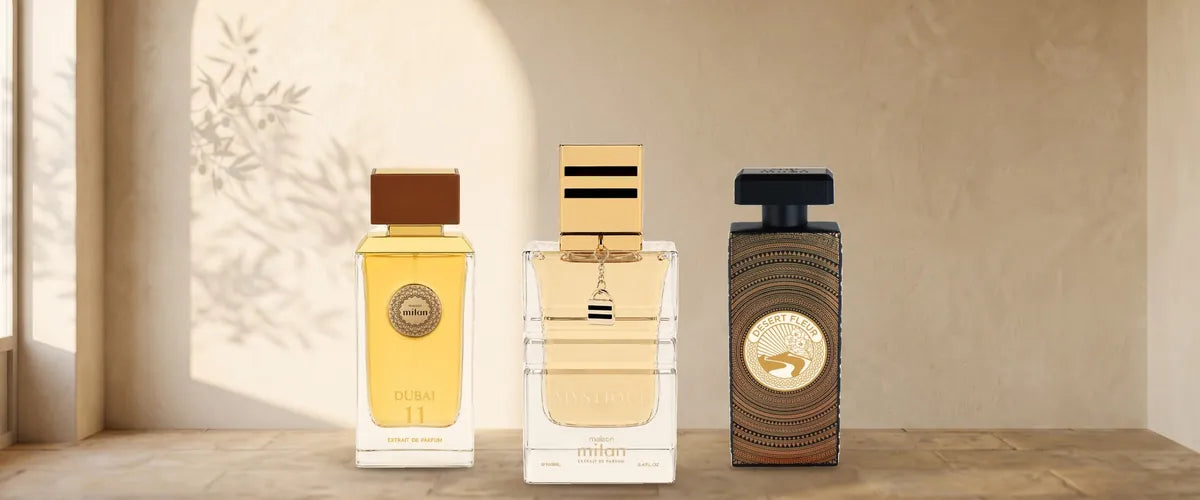
Because the natural material is so costly, many saffron notes are recreated around safranal. In Arabic perfumery, saffron or za'faran, is often paired with oud and rose. Dubai 11 comes up with a combination of black pepper and elemi at the top, olibanum and saffron in the heart, and vanilla and suede underneath, so the saffron sits between a peppery opening and a soft base. Velvet Dune opens with saffron and jasmine, moves into amberwood, and finishes on cedar and fir resin.
Amber: An Accord with No Single Source
Amber in perfumery is an accord rather than one ingredient, usually built from labdanum (a resin from the rockrose), benzoin and vanilla. Labdanum supplies a resinous, slightly leathery warmth, while benzoin and vanilla make it sweeter and softer. The accord has no link to fossilised amber, and ambergris, the marine and animalic material, is a separate note that is now mostly recreated with a synthetic molecule called Ambroxan.
A perfume can sit in this warm, resinous area without using amber. For example, Desert Mirage lists frankincense and pimento at the top, sandalwood and vetiver in the heart, and akigalawood, suede, and vanilla in the base.
Where Extrait de Parfum Fits
Extrait de Parfum describes concentration. It usually contains 20 to 40% perfume oil, against roughly 15 to 20% for an eau de parfum. More oil does not guarantee a stronger scent in every case, because the formula and the materials matter as much as the percentage, and some eau de parfum project more than some extraits. Typical benchmarks put wear time at 8 to 12 hours for an extrait and 4 to 6 hours for an eau de parfum. If longevity is the priority, go with Maison Milan Extrait de Parfum.
Choosing a Maison Milan Perfume by its Notes
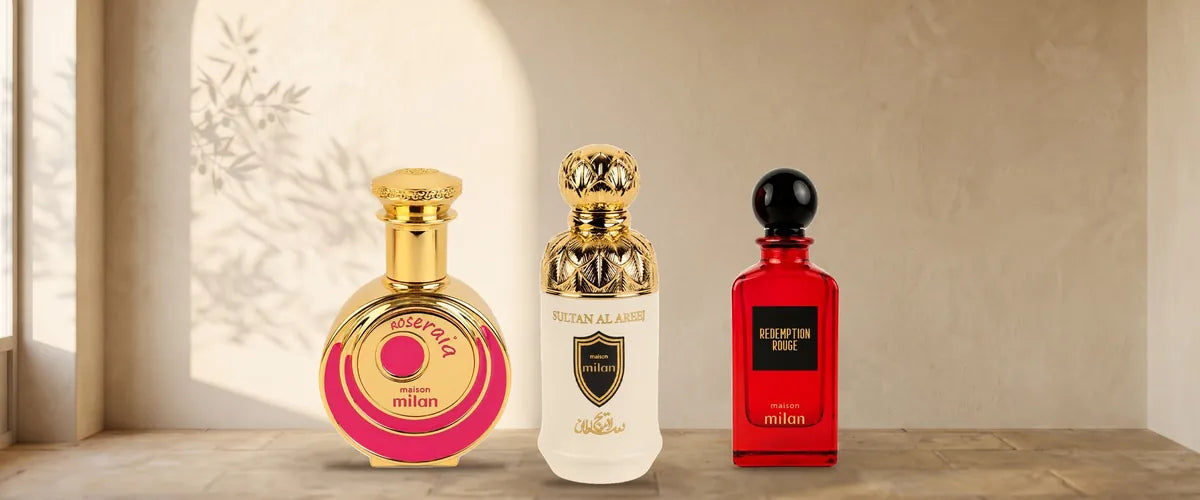
Maison Milan lists top, middle and base notes for each of these perfumes, which makes them easy to compare. If you like saffron with a suede base, Dubai 11 is the closer match, and if you prefer saffron over woods and resin, Velvet Dune is. For a perfume with no oud or saffron in its list, Sultan Al Areej starts with pear and hazelnut, has rose in the heart, and finishes on sandalwood and akigalawood.
Whichever you shortlist, test it on skin, because the same note list can smell different on different people.
FAQs
Which Arabic perfumes suit the cooler months?
Fragrances with resin, wood and vanilla in the base tend to suit cooler evenings, and higher-concentration formats such as extrait de parfum are usually suggested for that weather. Check the base notes first, then try the perfume in the evening air.
How long does an oud perfume last on the skin?
It depends on the formula and your skin. As a general benchmark, an extrait runs 8 to 12 hours and an eau de parfum 4 to 6 hours, and base materials such as vanilla, sandalwood and agarwood hold on longer than citrus or light florals.
Can women wear oud and saffron perfumes?
Yes. Saffron appears in perfumes sold to men, to women and as unisex, and oud is used the same way. Choose based on how the perfume smells on you.
Where to Start
When a note list names agarwood, saffron or frankincense, ask the brand whether it is the natural material or an accord, because the label rarely says. The Maison Milan site groups its fragrances into collections that include oud woods and spice amber, which is a practical way to begin.