
EDP vs EDT vs Extrait de Parfum: The Perfume Showdown

You spray your perfume before leaving home. By the time you've reached the restaurant, ordered your food, and stolen a few fries from your friend's plate, it's practically gone. Meanwhile, your friend gives you one hug, and suddenly you're wondering what on earth they're wearing. Three hours later, you can still smell it.
Rude? A little. A useful perfume lesson? Absolutely.
Not every fragrance is built to behave the same way. Some make a bright first impression and quietly disappear. Others unfold slowly, sticking around long after the opening notes have had their moment.
That's the difference between EDP vs EDT vs Extrait de Parfum.
Meet the Three Personalities in Your Perfume Collection
Think of EDT, EDP, and extrait as three different approaches to getting noticed. None is automatically better. They simply bring different things to the party.
1. EDT: Bright Opening, Short Stay
Eau de Toilette is the lighter, fresher perfume that opens with a bright, citrusy scent and feels easygoing on the skin. A lot of perfume lovers keep EDTs for regular daytime wear.
Here's what this perfume brings to the table:
-
Concentration: Around 5–15% scent oils.
-
Longevity: Roughly 3–6 hours, but some may last a little longer.
-
Sillage: Moderate or soft.
-
Best for: Daytime outings, warm weather, office wear, and anyone who likes a lighter scent.
The catch? You might need a touch-up before dinner. Considering the price, a touch-up isn’t really a flaw.
2. EDP: Rich Vibe, Decent Longevity
Eau de Parfum offers the best of both worlds. It’s an everyday all-rounder fragrance that works for almost all occasions.
Morning meeting? Dinner reservation? An impromptu plan that somehow ends at midnight? It’ll stay strong throughout.
Here's what you get with an EDP:
-
Concentration: About 15–20% scent oils.
-
Longevity: Approximately 4–8 hours, sometimes longer.
-
Sillage: Pleasantly noticeable.
-
Best for: Everyday signature scents, dinners, celebrations, and day-to-night wear.
EDPs can be satisfying when you enjoy how a fragrance unfolds, from a lively opening to a floral or spicy heart and warm woods or musk.
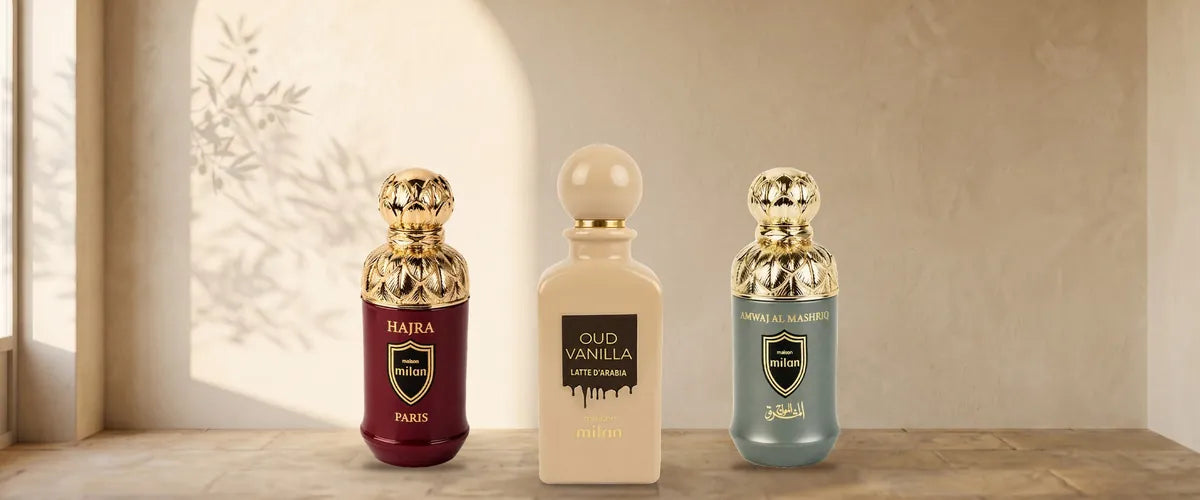
If you want to add an EDP to your perfume shelf, Maison Milan’s Hajra Paris is pretty promising.
3. Extrait de Parfum: Luxurious Skin Feel, Impressive Stay
This category is the most concentrated of all. Also known as pure perfume, extrait de parfum offers a higher proportion of scented oils than EDT or EDP. The result? A potentially rich, nuanced fragrance that unfolds beautifully over time.
The word to note? Potentially.
A high perfume concentration doesn't automatically mean enormous projection or all-day longevity. Some extraits stay close to the skin, revealing little details to anyone lucky enough to get close.
Here's what to expect for an extrait de parfum:
-
Concentration: About 20–40% scent oils.
-
Longevity: Many last 6–12 hours or longer.
-
Sillage: Can be intimate or powerful.
-
Best for: Evening wear, special occasions, cooler weather, and anyone who loves exploring fragrance in depth.
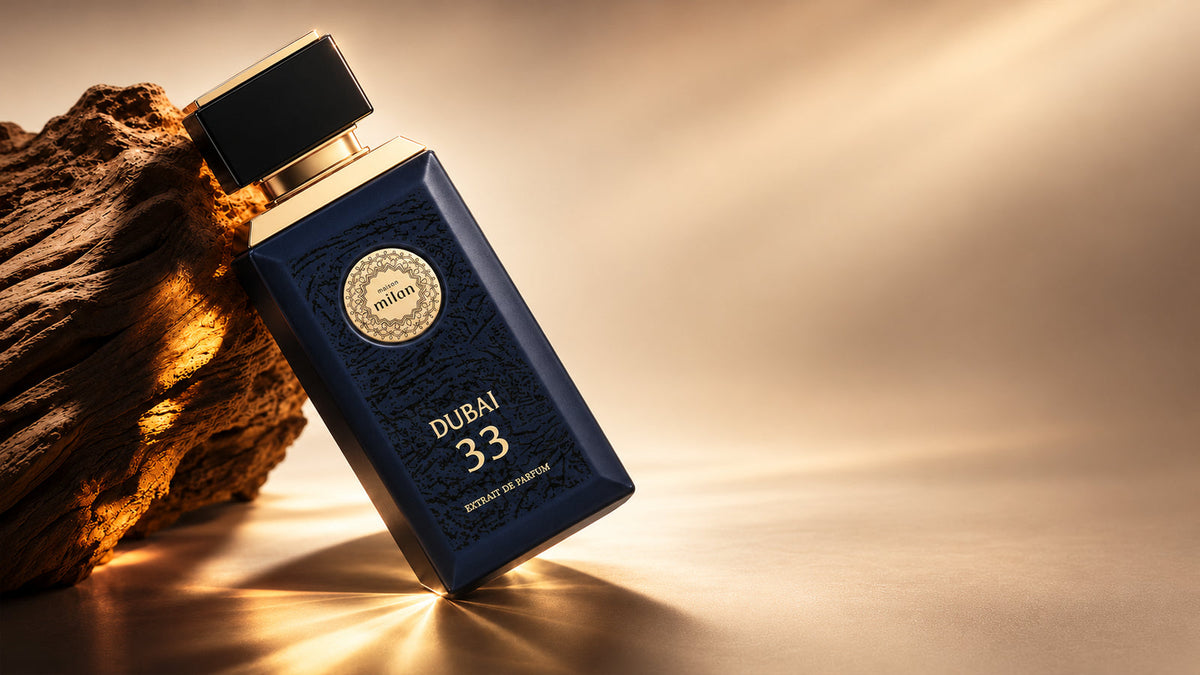
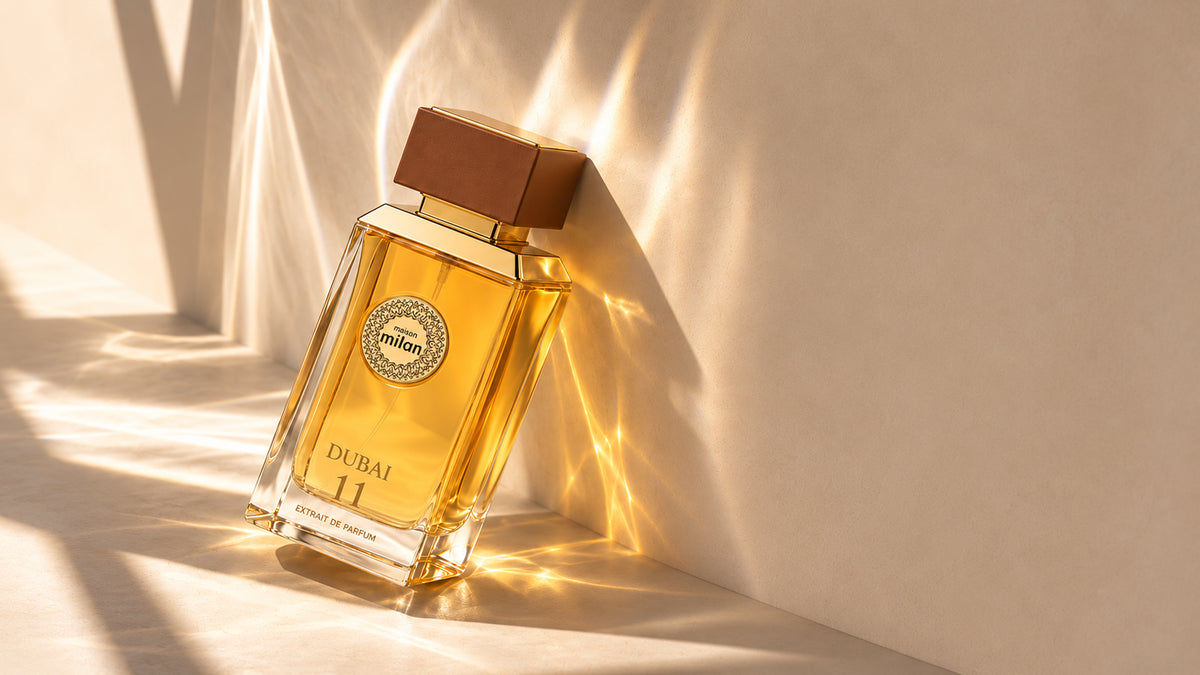
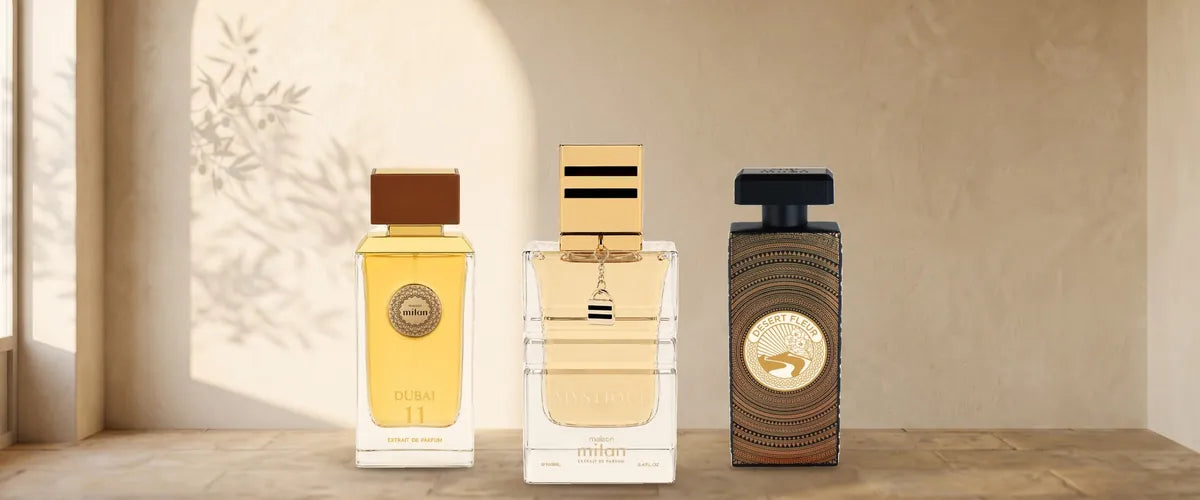
Maison Milan's Louvre d'Ambre, Arabian Opulence, and Dubai 55 are good options to explore.
One word of advice: don't go wild with the sprays just because you're wearing extrait. You want people to ask what smells so good, not start looking for the nearest open window.
The Plot Twist: Stronger Doesn't Always Mean Better
Here's where perfume shopping gets confusing.
You head out to buy a perfume that offers the most value. Naturally, a more concentrated formula makes sense. Right?
It has the highest scent oil percentage, so it should project most strongly and even last an entire week. Surprisingly (and sadly), that’s not how it works.
Sometimes, an eau de toilette can outperform your pure perfume.
How?
Because perfume oil percentage is only a part of the bigger puzzle.
There are other elements at play, including:
- The ingredients
- The molecular properties of scent oils
- The skin chemistry
- The weather of your region
Citrus-rich perfumes, for instance, open with a burst of energy but easily lose their initial sparkle, way sooner than perfumes built around woods or certain musks.
Then there's the difference between longevity and sillage.
Longevity is how long the scent stays on your clothes or skin. Sillage is the trail it leaves as you move.
A perfume can last all day without announcing itself to everyone within a three-metre radius. Another might fill a room initially but fade much sooner.
Which One Should You Actually Buy?
Your fragrance journey doesn’t necessarily have to begin with an eau de toilette and end at an extrait de parfum. There’s no fragrance degree involved here.
The concentration that might work the best for you depends on your taste in perfumes and when (and where) you plan to wear it.
Choose EDT if:
- You love fresh, crisp, and airy scents.
- You need something comfortable for warm days or shared workspaces.
- You don't mind reapplying your perfume.
Choose EDP if:
-
- You want a versatile fragrance for several occasions.
- You prefer a balance of presence and longevity.
- You're looking for a potential everyday signature scent.
Choose extrait de parfum if:
- You enjoy richer or more concentrated fragrance styles.
- You want to explore perfumes that may wear close to the skin for hours.
- You're happy to invest time in testing a fragrance before committing to it.
And if you're shopping for the UAE's warm climate, remember that heat can amplify the initial impact of some fragrances. Start with fewer sprays, especially in enclosed spaces. You can always apply more next time.
Get More Out of Your Perfume
Perfumes don’t only last long because of their fragrance oil concentration. The way you apply them plays an important role, too.
Never leave your skin dry. That’s where many fail. Dry skin doesn’t offer anything for the scent molecules to cling to. Moisturising it with an unscented moisturiser can be a game-changer.
Leave your wrists alone. Rubbing the wrists together after applying perfume does no good. If anything, it only breaks the molecules and changes the opening of your perfume.
Fewer sprays are always better. Start with three carefully placed sprays and adjust later. This one’s especially important if you’re using an EDP or extrait de parfum.
Give it time. The first few minutes reveal only part of a perfume's character. Let it settle and reveal its magic.
Don’t rush the purchase. Carry the fragrance for hours before buying. Pay attention to how it evolves. This will tell you much more about a perfume than a quick, half-hearted strip test.
So, Who Wins the Perfume Showdown?
EDT is the easy-going favourite. EDP is the dependable all-rounder. Extrait de Parfum is the concentrated indulgence for those who enjoy a little extra depth.
Clearly, the EDP vs EDT vs Extrait de Parfum battle has no definite winner. It all comes down to a perfume that clicks. A scent that matches your vibe, helps you feel confident, and offers good value in terms of longevity and price.
The fragrance at Maison Milan has something for everyone. Whether you’re looking for a bergamot-based EDT, a rose-forward EDP, or a vanilla-based pure perfume, we’re sure you’ll find your next favorite perfume for your collection.